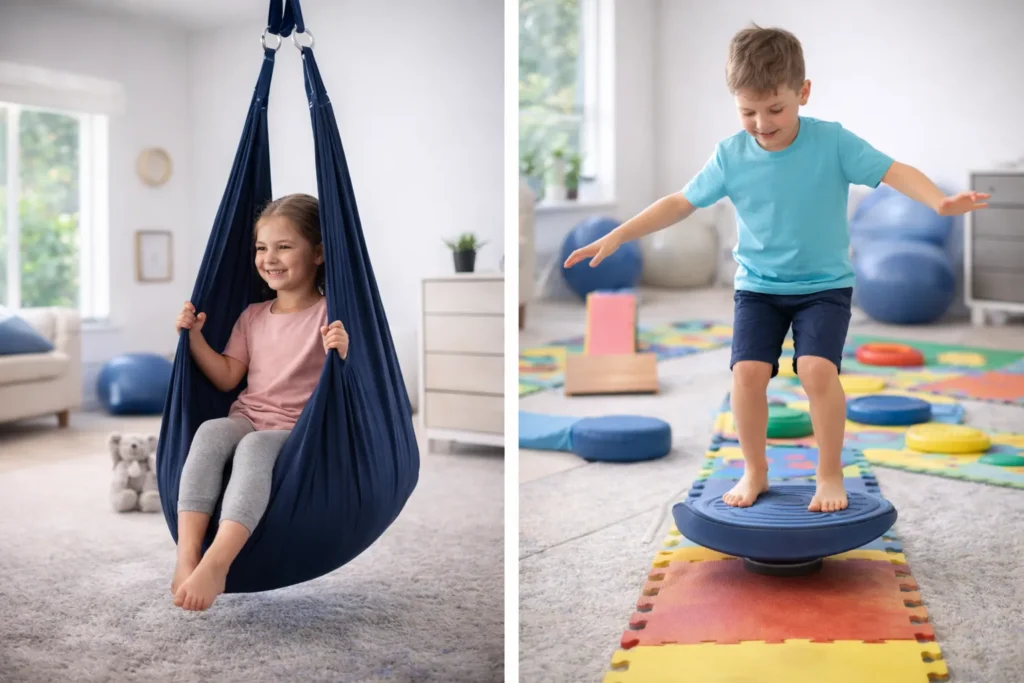
Vestibular therapy helps children and adults improve balance, coordination, posture, and body awareness by training the inner-ear balance system. Many people benefit from vestibular-based activities at home—especially those who experience dizziness, poor balance, sensory processing challenges, autism, developmental delays, or difficulty with movement planning. The right vestibular therapy equipment and safe daily activities can support calmer regulation, better focus, and improved confidence during walking, transitions, and play. The most important rule is safety: vestibular input can be powerful, so activities should be introduced slowly, supervised when needed, and matched to the person’s comfort level.
What Is Vestibular Input and Why Does It Matter?
The vestibular system is located in the inner ear and works with vision and muscles/joints to help your brain understand movement and position. When vestibular processing is weak or over-sensitive, a person may struggle with balance, feel dizzy, avoid movement, seek constant spinning, or become overwhelmed by motion. Vestibular therapy uses controlled movement—like swinging, rocking, balancing, or gentle rotation—to help the brain organize movement information more effectively. Home routines can complement professional therapy by creating consistent, predictable movement experiences that support daily function.
Safe Vestibular Activities You Can Do at Home
The best at-home vestibular therapy activities are simple, repeatable, and easy to adjust. Start with short sessions (1–3 minutes), observe how the body reacts, then slowly increase time if the response is positive.
1) Swinging (Controlled, Not Extreme)
Swinging is one of the most common vestibular activities because it provides rhythmic movement. It can be calming or alerting depending on speed and direction.
Safe swinging tips:
- Start with slow, linear motion (forward/back)
- Keep sessions short at first
- Avoid fast spinning unless a therapist recommends it
- Use a stable swing setup with proper mounting and safety checks
Best for: regulation, balance, posture control, sensory organization
2) Rocking and Gentle Movement
Rocking in a rocking chair, glider, or therapy rocker can provide steady vestibular input without intense motion.
Try:
- Rocking chair (slow rhythm)
- Sitting on a therapy ball with gentle controlled bouncing (supervised)
- Side-to-side rocking while seated
Best for: calming input, posture support, easier transitions
3) Balance Walks and “Sensory Paths”
Balance activities improve core strength and coordination.
At-home balance ideas:
- Heel-to-toe walking on a taped line
- Stepping over small cushions or cones
- Walking across a foam mat or textured path
- “Balance challenge” game: slow steps, pause, turn, continue
Best for: core stability, coordination, confidence, gait control
4) Core-Based Play (Strong Body = Better Balance)
Core strength supports vestibular control. You can build vestibular skills through play-based movement.
Activities:
- Bear walks, crab walks, frog jumps
- Wall push-ups (great “heavy work” + stability)
- Crawling through tunnels
- Yoga poses: tree pose, downward dog, plank (short holds)
Best for: body awareness, stability, balance reactions
5) Controlled Turning and Direction Changes
Some individuals struggle when direction changes quickly.
Simple practice:
- Walk to a target, stop, slowly turn, return
- “Red light, green light” movement game
- “Clock turns”: turn to 12, 3, 6, 9 slowly
Best for: motion control, safe turning, reducing falls
Safety Rules for Vestibular Therapy at Home (Very Important)
Vestibular input can sometimes cause dizziness, nausea, headache, emotional meltdowns, or fatigue—especially in the beginning. Use these safety rules to keep home therapy supportive and safe.
Follow these rules:
- Start slow (short sessions, gentle movement)
- Always supervise children during swings, balance boards, and therapy balls
- Stop immediately if you see: dizziness, pale face, sweating, nausea, crying, headache, unusual tiredness, or behavior changes
- Avoid fast spinning unless you have professional guidance
- Use safe flooring (rug/foam mat) and clear the area from sharp edges
- For medical dizziness conditions (like vertigo), consult a clinician before starting home routines
Equipment Buying Guide: What to Buy for Home Vestibular Therapy
Home equipment can be very helpful, but you don’t need to buy everything. Choose based on available space, safety, user age/size, and therapy goals.
1) Indoor/Outdoor Swings (Most Popular Vestibular Tool)
Swings support vestibular input through controlled movement.
Good swing options:
- Platform swing (stable seating, good for sensory needs)
- Hammock swing (calming, cocoon-like feel)
- Therapy pod swing (supportive, gentle, secure)
- Belt swing (older kids who have good trunk control)
What to check before buying:
- Weight capacity
- Mounting type (ceiling mount or stand)
- Material strength and safety stitching
- Washable or easy-clean surface
- Space clearance (front/back + sides)
Safety note: mounting should be professionally installed if you’re unsure. A weak ceiling mount is dangerous.
2) Balance Boards and Wobble Cushions
These tools train balance and core stability.
Best for:
- improving posture
- developing balance reactions
- gentle vestibular input during seated work
Buying checklist:
- anti-slip surface
- stable base
- appropriate size for the user
- beginner-friendly wobble angle (not too steep)
3) Therapy Balls (Use with Supervision)
Therapy balls help posture, balance, and controlled movement.
Best use:
- gentle bouncing
- seated posture activities
- core exercises with guidance
What to check:
- correct ball size for height
- anti-burst material
- non-slip base ring (helpful for beginners)
4) Stepping Stones / Sensory Path Mats
These improve balance, coordination, and foot placement.
Best for:
- motor planning
- confidence building
- fun routines that feel like a game
What to check:
- non-slip backing
- washable material
- stable grip on floor
- safe texture (not sharp)
5) Foam Pads and Balance Beams (Beginner-Friendly)
Simple foam balance pads and low beams are great for gradual progress.
Best for:
- safe balance training
- gentle challenge without high risk
- indoor use on soft flooring
How to Build a Simple Home Vestibular Routine (10 Minutes)
Here’s a basic routine you can follow 3–5 days per week. Adjust based on tolerance.
- Warm-up (2 minutes): slow marching, shoulder rolls, deep breaths
- Swinging or rocking (2 minutes): gentle forward/back movement
- Balance activity (3 minutes): sensory path walk or taped line walk
- Core play (2 minutes): bear walk, crab walk, or wall push-ups
- Cool-down (1 minute): slow breathing, quiet seated time
Consistency is more important than intensity. Keep it fun and stop early if signs of discomfort appear.
Signs You Should Reduce or Stop Vestibular Activities
Stop or reduce intensity if you notice:
- dizziness or nausea
- headaches
- unusual irritability or emotional outbursts
- pale face, sweating, or yawning
- excessive fatigue after sessions
- avoidance behaviors that increase over time
These signs mean the nervous system has had too much. Decrease speed, shorten time, or switch to gentler movement and deep-pressure calming strategies.