
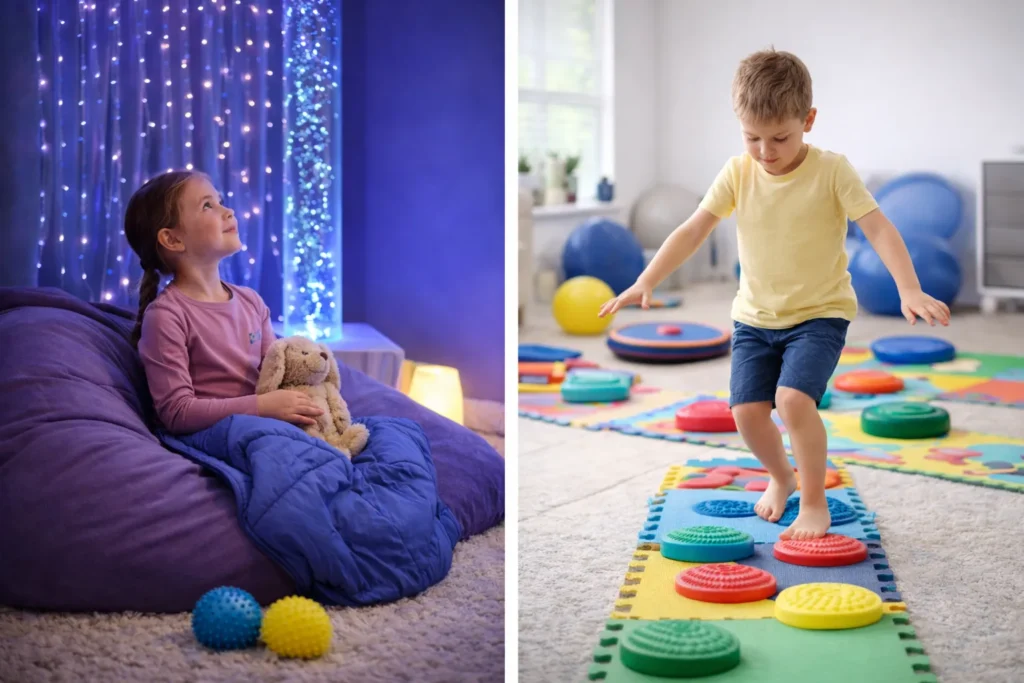
A home sensory setup can make daily life easier for children and teens who experience sensory processing challenges, autism, ADHD, anxiety, developmental delays, or high stress. Sensory input affects how the brain organizes information from touch, movement, sound, sight, and body awareness. When a child is overwhelmed, the right calming sensory tools can reduce stress and help them self-regulate. When a child is tired, inattentive, or low-energy, the right alerting sensory tools can improve focus, engagement, and readiness to learn. The goal isn’t to “change” a child—it’s to support comfort, regulation, and independence using safe, structured sensory choices.
Understanding Calming vs Alerting Sensory Input
Sensory tools generally fall into two categories: calming (down-regulating) and alerting (up-regulating). Calming input helps the nervous system slow down when a child feels overstimulated, anxious, or emotionally dysregulated. Alerting input helps the body and brain “wake up” when energy is low, attention is drifting, or motivation is reduced. Many families see the best results when they use sensory tools intentionally: calming tools during meltdowns, transitions, bedtime, or after school; and alerting tools before homework, therapy sessions, or school routines.
Calming Sensory Tools (Down-Regulating)
Calming tools typically provide deep pressure, steady rhythm, warmth, predictable touch, or gentle movement. These signals can help the brain feel safe and organized.
Popular calming tools for home:
- Weighted blanket or lap pad: Supports deep pressure input for relaxation
- Compression vest or snug wrap: Helps with body awareness and calm focus
- Body sock or stretch band: Gives gentle resistance and grounding input
- Soft sensory lighting: Warm lamp light, dimmable bulbs, or soft LED options
- Noise-reduction headphones: Helpful for sound sensitivity and busy households
- Fidget tools (quiet/soft): Stress balls, putty, textured fidgets for calm hands
- Calming scents (optional): If tolerated—lavender-like scents can be soothing
- Rocking chair or gentle swing: Slow movement can reduce anxiety
- Tactile comfort items: Soft blankets, plush pillows, smooth-texture items
Calming tools work best when used early—before stress becomes a meltdown. If a child is already at a high stress level, keep input gentle and predictable, and reduce background noise and visual clutter.
Alerting Sensory Tools (Up-Regulating)
Alerting tools increase energy, attention, and readiness. They often involve faster movement, stronger sensory signals, or active engagement.
Popular alerting tools for home:
- Mini trampoline (with safety bar): Helps with energy release and focus
- Balance board or wobble cushion: Activates core and improves alertness
- Therapy ball chair or wiggle seat: Provides movement while sitting
- Resistance bands: Great for “heavy work” and body activation
- Textured sensory path: Stepping stones, sensory mats, or foot textures
- Bright, natural light: A well-lit space helps wake up the nervous system
- Chewy tools (if appropriate): Oral input can improve focus and regulation
- Active fidgets: Click-free, durable items that keep hands busy without noise
- Movement breaks: Jumping jacks, wall push-ups, animal walks, stretching
Alerting tools are best used in short bursts. Too much fast input can overstimulate some kids, so always start small and watch how your child responds.
How to Build a Sensory Corner at Home (Step-by-Step)
A sensory corner is a small, dedicated space that helps a child self-regulate. It should feel safe, comfortable, and easy to use. You don’t need a big room—just a calm corner in a bedroom, living room, or play area.
Step 1: Pick the Right Location
Choose a space that is:
- Quiet or low-traffic
- Away from loud TV or kitchen noise
- Easy for your child to access independently
- Safe (no sharp edges, breakable items, or cords)
Step 2: Decide the Main Goal (Calm, Focus, or Both)
Some kids need the sensory corner mainly for calming; others use it for focus and organization. Many homes set up a “calm zone” as the base, then add a few alerting tools for daytime use.
Step 3: Build the Base (Comfort + Safety)
Start with simple essentials:
- Soft mat, rug, or foam tiles
- Floor cushions or bean bag chair
- A blanket or comfort pillow
- A small shelf or bin for tools
- A visual boundary (tent, curtain, corner divider, or canopy)
The best sensory corners feel “contained” and predictable. A small pop-up tent or canopy can help reduce sensory overload by limiting visual distractions.
Step 4: Add Calming Tools First
For most kids, calming tools are the core. Good starter tools:
- Weighted lap pad or blanket (use with supervision as needed)
- Noise-reduction headphones
- Soft fidget set (quiet textures)
- Calm-down bottle (glitter jar) or slow visual timer
- Soft lighting (warm, dim)
Step 5: Add Optional Alerting Tools (If Needed)
If your child struggles with attention or low energy, add one or two alerting options:
- Resistance band for heavy work
- Wobble cushion for sitting
- Small stepper or mini trampoline (if space allows)
- Therapy ball for bouncing (supervised)
Step 6: Make It Easy to Use (Routine + Visuals)
A sensory corner works better when your child knows when and how to use it. You can add:
- A simple feelings chart (happy, sad, angry, tired, overwhelmed)
- A “choose one tool” visual card
- A calm-down routine (breathe, squeeze, sit, drink water)
Keep it simple—too many options can overwhelm. Rotate tools weekly instead of putting everything out at once.
Calming vs Alerting: Quick Guide for Parents
Use calming tools when you notice:
- Meltdown building signs
- Anxiety, tears, irritability
- Covering ears, avoiding touch
- Trouble sleeping or winding down
- Overstimulation after school or outings
Use alerting tools when you notice:
- Low energy, sluggish movement
- Daydreaming, poor attention
- Difficulty starting tasks
- Restlessness that looks like “bored energy”
- Weak posture or constant slouching
Every child is different. The same tool can calm one child and alert another. Observe the results and adjust based on response.
Safety Tips for a Sensory Corner
- Supervise weighted products for younger children
- Keep swings, trampolines, and balls in safe areas
- Choose non-toxic, easy-to-clean materials
- Avoid very bright flashing lights for children sensitive to visual input
- If your child has seizures or medical considerations, consult a clinician before using strong sensory input tools