
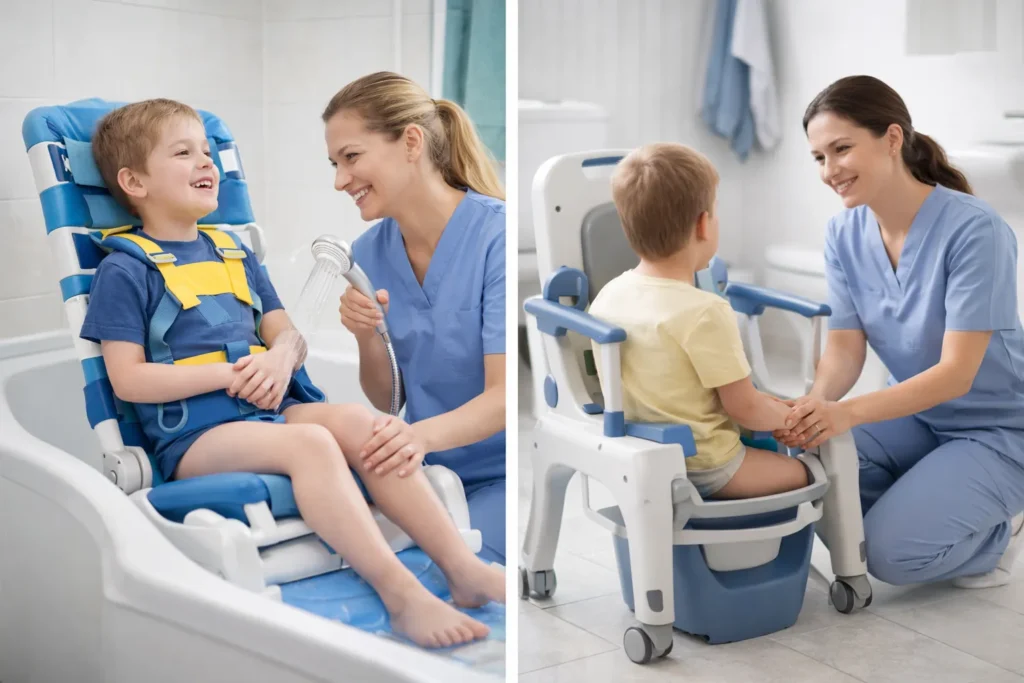
Caring for a child with special needs means creating daily routines that are safe, comfortable, and dignity-focused—especially in the bathroom. Bathing and toileting can be challenging when a child has low muscle tone, limited mobility, sensory sensitivities, poor balance, or postural control difficulties. The right pediatric therapy bathing and toileting solutions reduce caregiver strain, lower fall risk, and help children feel secure and supported. With proper equipment and a well-planned setup, families can turn stressful bathroom moments into smoother, safer routines that support independence over time.
One of the most important goals in pediatric bathroom care is safe positioning. When a child cannot sit upright independently or tires quickly, standard tubs and toilets do not provide enough stability. A supportive setup helps keep the pelvis aligned, the trunk stable, and the head in a comfortable position. This is where pediatric bath chairs, shower seats, and positioning supports become essential. These products are designed for wet environments and often include features like adjustable back support, safety harnesses, non-slip bases, and drainage-friendly materials. A properly fitted bath chair allows the child to relax during washing while keeping them safely supported, reducing both anxiety and movement-related risk.
For families who use a bathtub, a bath transfer system or supportive bath seat can make a major difference. Many caregivers struggle with lifting and awkward angles, especially as a child grows. Equipment that improves transfer and stability can protect the child and reduce caregiver injuries. Non-slip mats, handheld showerheads, and easy-reach bathing accessories also support smoother routines. The key is choosing solutions that match the child’s size, posture needs, and sensory comfort—because even a stable chair won’t help if the child feels overwhelmed by cold water, loud sounds, or a slippery surface.
Toileting is another daily challenge where the right equipment improves safety and routine success. Children with special needs may require toileting supports due to balance issues, difficulty with transfers, reduced trunk control, or bowel and bladder management needs. Options such as supportive commode chairs, raised toilet seats, and pediatric toilet positioning seats can provide stability and reduce fear. Many pediatric toileting chairs offer adjustable height, removable pans for easy cleaning, and supportive straps for safety. The goal is not only to “get through” toileting, but to create a structured routine that supports hygiene, comfort, and confidence.
A highly effective approach is focusing on posture and alignment during toileting. When a child’s hips are unstable or feet dangle, it can affect comfort and even make bowel movements harder. Adding foot support or using a chair designed to maintain correct alignment can improve toileting success. In many cases, children benefit from a toileting seat that keeps the pelvis supported and the trunk upright. This reduces fatigue, improves cooperation, and helps caregivers complete hygiene tasks more easily. Over time, consistent positioning can support independence, especially when combined with therapy goals and a predictable routine.
When selecting pediatric bathing and toileting products, always consider the child’s mobility level, weight capacity, adjustability needs, and sensory preferences. Adjustable equipment is often the best investment because children grow quickly and their therapy needs may change. Look for features like easy-to-clean surfaces, waterproof padding, rust-resistant frames, secure straps, and non-slip feet. For children who have sensory sensitivities, soft-touch materials, warm-water friendly surfaces, and calm positioning can make a big difference. Equipment should feel supportive—not restrictive—so the child remains comfortable and cooperative.
Caregiver safety is just as important as the child’s comfort. Bathing and toileting often involve lifting, bending, and repetitive strain. Supportive products can reduce caregiver workload by improving positioning and stability, which means fewer sudden movements and safer transfers. If caregivers are struggling with back, shoulder, or wrist strain, it’s a sign that better equipment or a safer setup is needed. Simple changes—like adjusting the bathroom layout, using transfer aids, or adding stable seating—can prevent injuries and improve daily routines significantly.
Finally, it’s helpful to treat bathroom care as a part of therapy, not just a task. Occupational therapists and physical therapists often recommend bathing and toileting supports as part of a broader plan to build independence and functional skills. A well-chosen setup can support communication, routine-building, body awareness, and self-care skills. Whether your goal is improved safety, less stress, or increased independence, pediatric therapy bathing and toileting solutions provide practical support that helps families focus on comfort, dignity, and progress—every single day.